 Brad E. Bailey


A poster only works if the person holding it can read it and believes it.
The bottom line up front: Through 2021, the job at Mecklenburg County Public Health was to collect the information, work on the messaging, and make sure the jurisdictions in the area were aligned, so a county of many language communities got correct COVID-19 vaccine information in one clear look. That came to dozens of pieces, in all shapes and sizes, for all sorts of social media and other mediums, in 15 languages besides English, with review rounds back in under 48 hours.
The question: how do you keep a message correct, consistent and readable in 15 languages?
01What we saw: many sources, many formats, one public
In late December 2020, Gibbie Harris, then the Mecklenburg County Health Director, brought in outside help for Mecklenburg County Public Health communications. The work ran from January to December 2021. It began on Monday, January 4, alongside Raynard Washington, then Deputy Health Director, with the job of helping the department see, align and execute. That afternoon the first request came in: a vaccine flyer for adults 75 and older, needed within 48 hours, and a Spanish version right behind it.
The department was working in a fast-moving time. The vaccine was new, eligibility changed by phase, and each agency had its own charts, wording and layout. Residents were seeing the same facts from several places in several shapes, which made one clear look worth building.
A translation has to be accurate and has to match the one next to it.
02How we aligned: the facts first, then one simple look
The job was alignment. First, get the county, the city and the other jurisdictions to agree on what was correct: who was eligible, where to go, how to book, which dates. Only then did the design start.
Once the facts were decided, they were simplified. Everyone had charts and their own formats. Those became one plain visual system used across the jurisdictions, so a resident would see the same message from any of them.
Messages kept changing: a new event site, a new activity, a new learning session. Each change meant rewriting and re-reviewing every language, every time. The simplified look had to say the whole thing in whatever language was on the page, 15 different ways.
The information was plentiful. The work was bringing it together. Federal, state, county and city authorities were all putting out guidance, and each had its own priorities, communications team, funding, advertising budget and agency partners. The public still needed one clear, timely answer, especially once vaccines began to roll out.
The work was done with and alongside Gibbie Harris, the Health Director, and Raynard Washington, the Deputy Health Director, supporting the department's own team and coordinating with public affairs offices, public information officers and outside communications partners across the jurisdictions. The aim was to take complex guidance and turn it into short messages people could act on, quickly and accurately, in a fluid and difficult time with messaging coming from the federal authorities on down. Each group kept its own budget, agency and distribution channels, so the central task was coordination, more than communication.
Working with the City of Charlotte, the team also found translation resources to reach the area's 15 recognized language communities. Flyers and other public health materials in those languages were often turned around on very tight deadlines.
Partners reviewed the material: the City's office, grantees and community partners, and other offices.
03What we built: one poster, fifteen languages
The files that survive show the work in order.
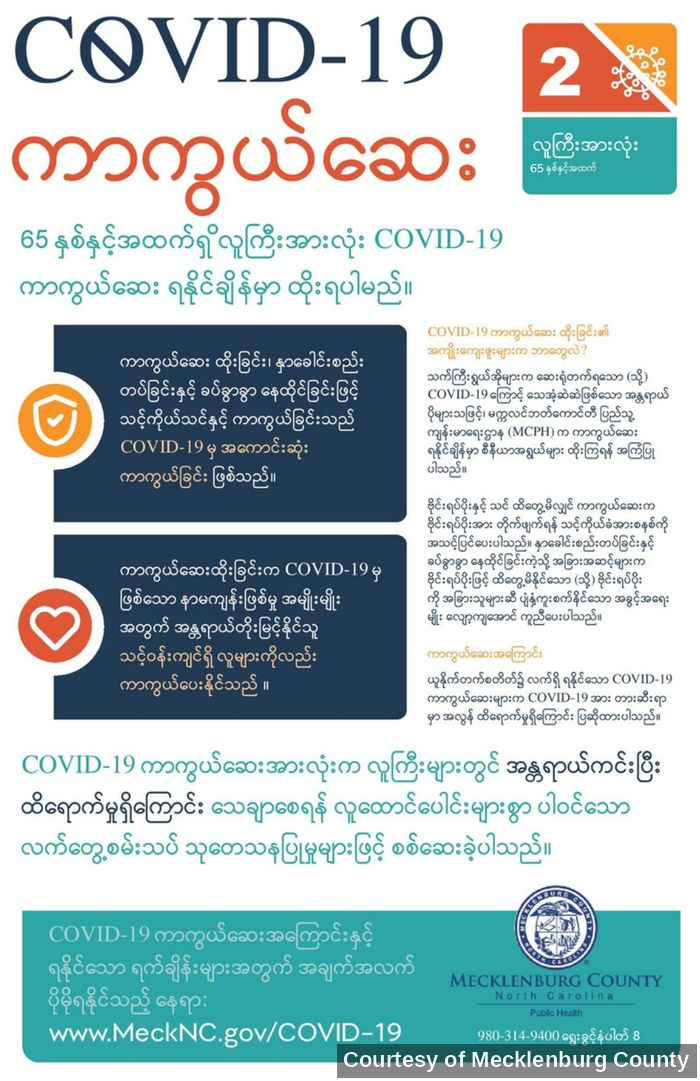
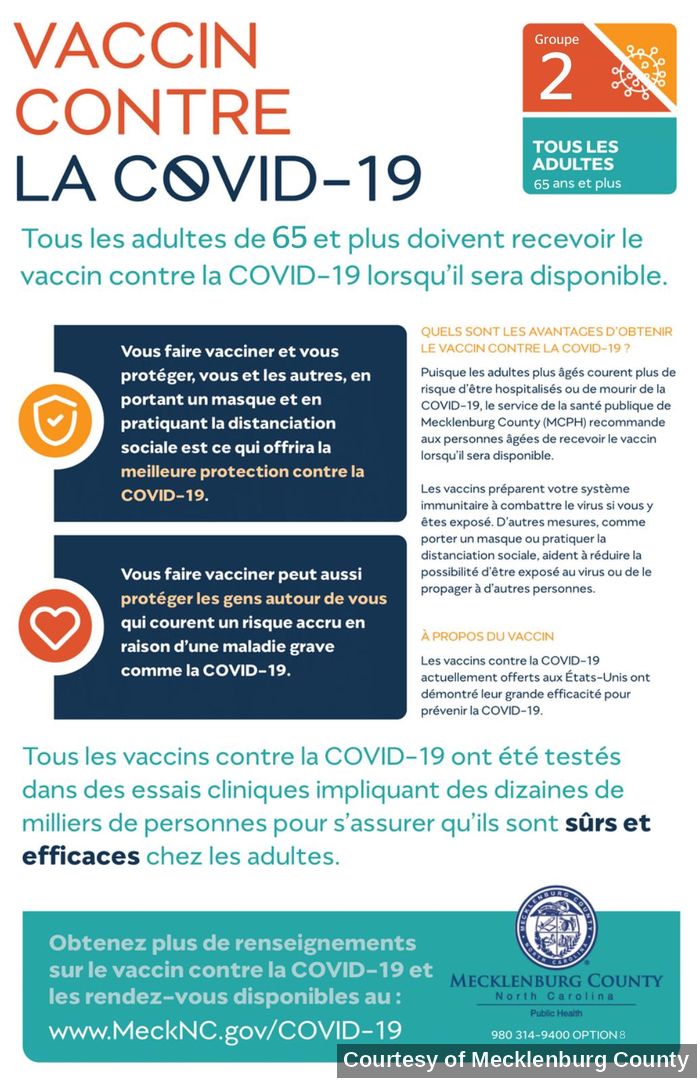
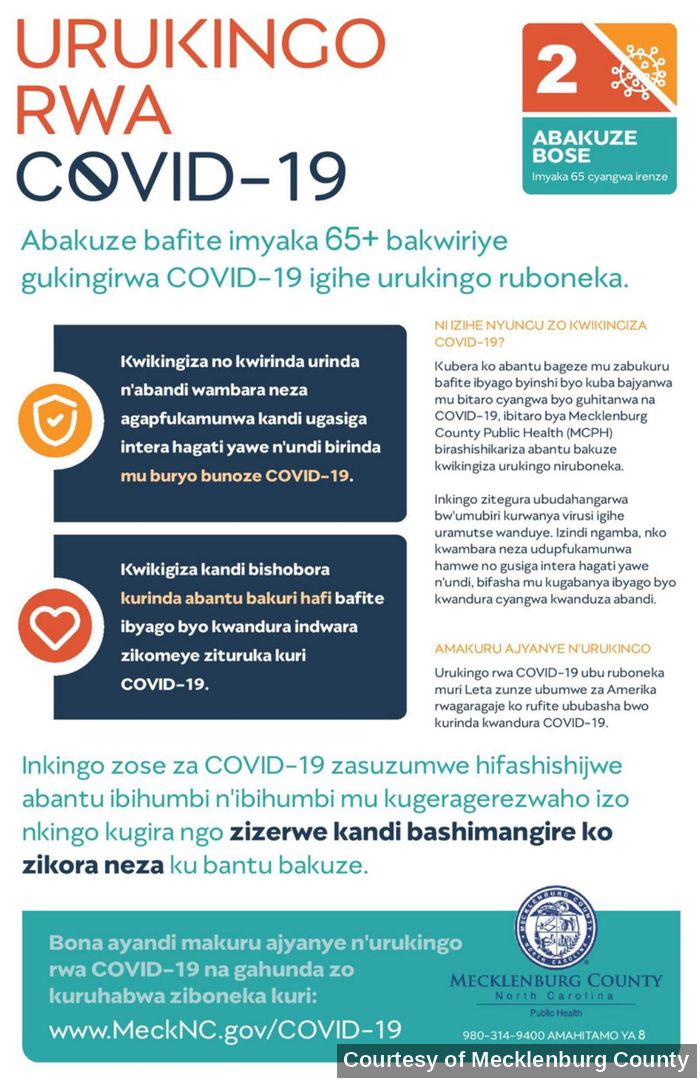
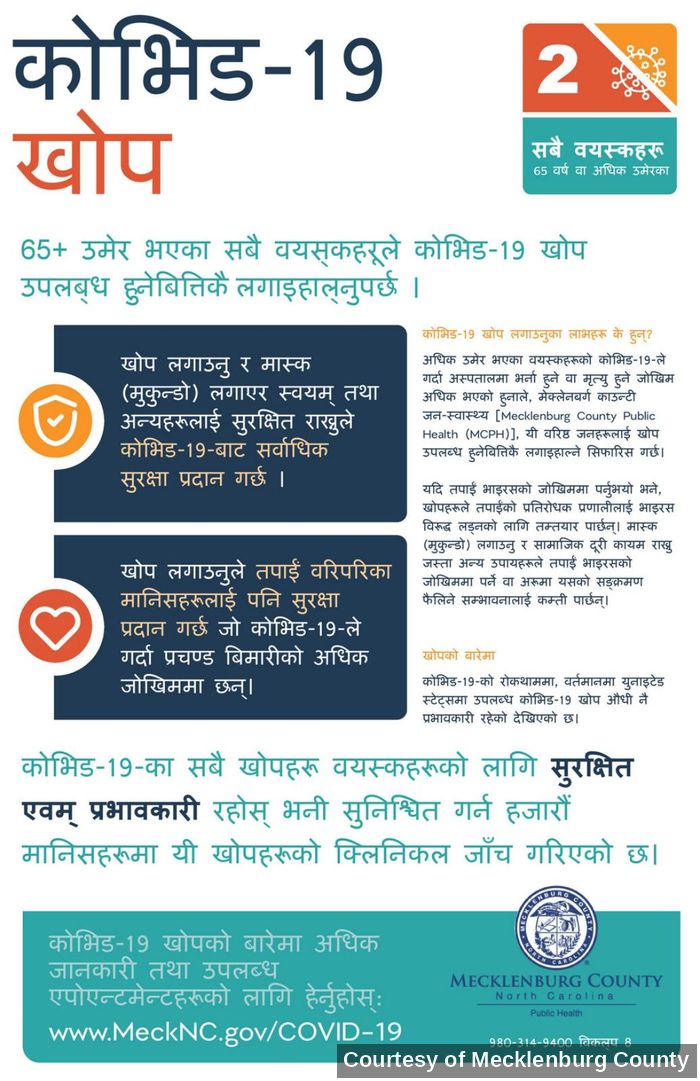
January 21, 2021. The "Get Vaccinated" poster in ten languages in one run: Amharic, Arabic, Burmese, French, Kinyarwanda, Nepali, Russian, Swahili, Tigrinya and Vietnamese.
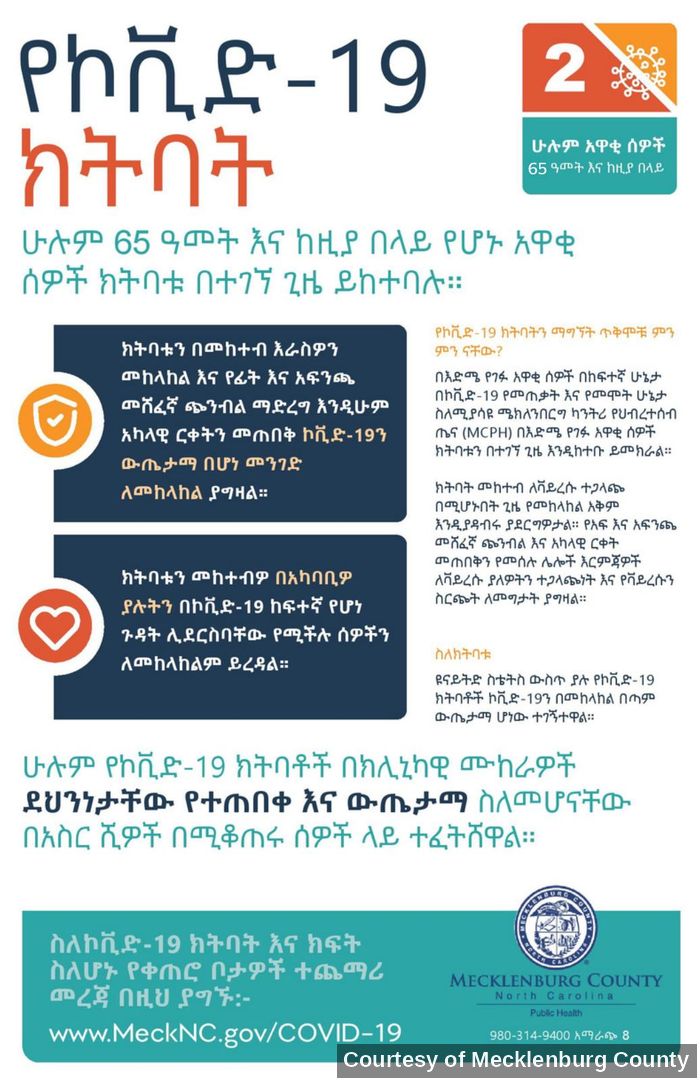
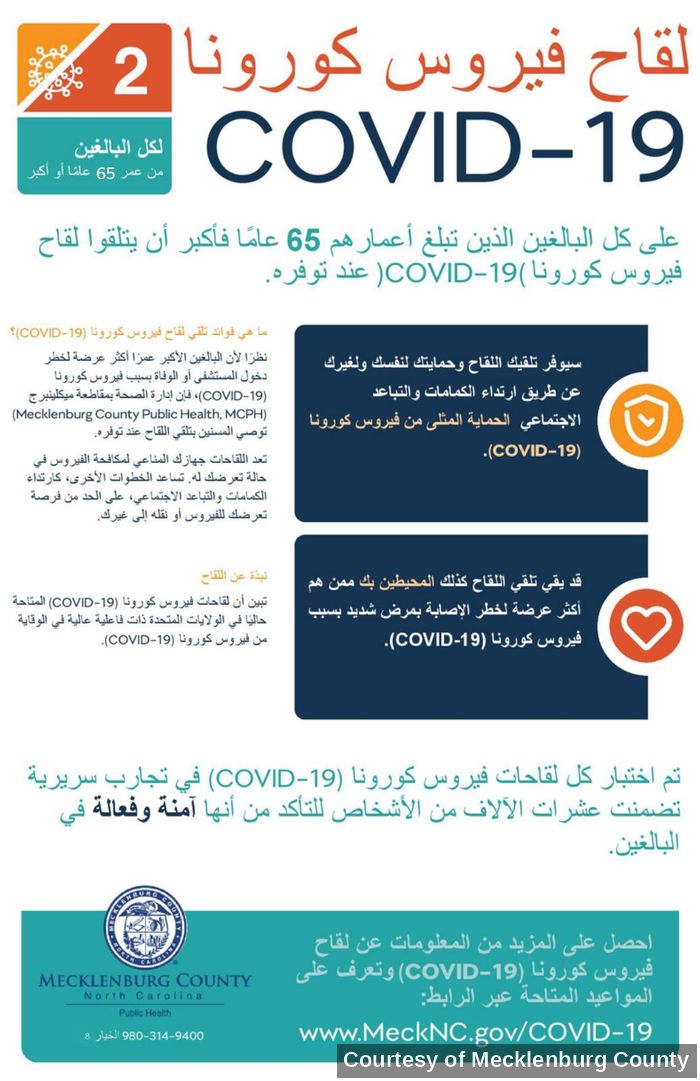
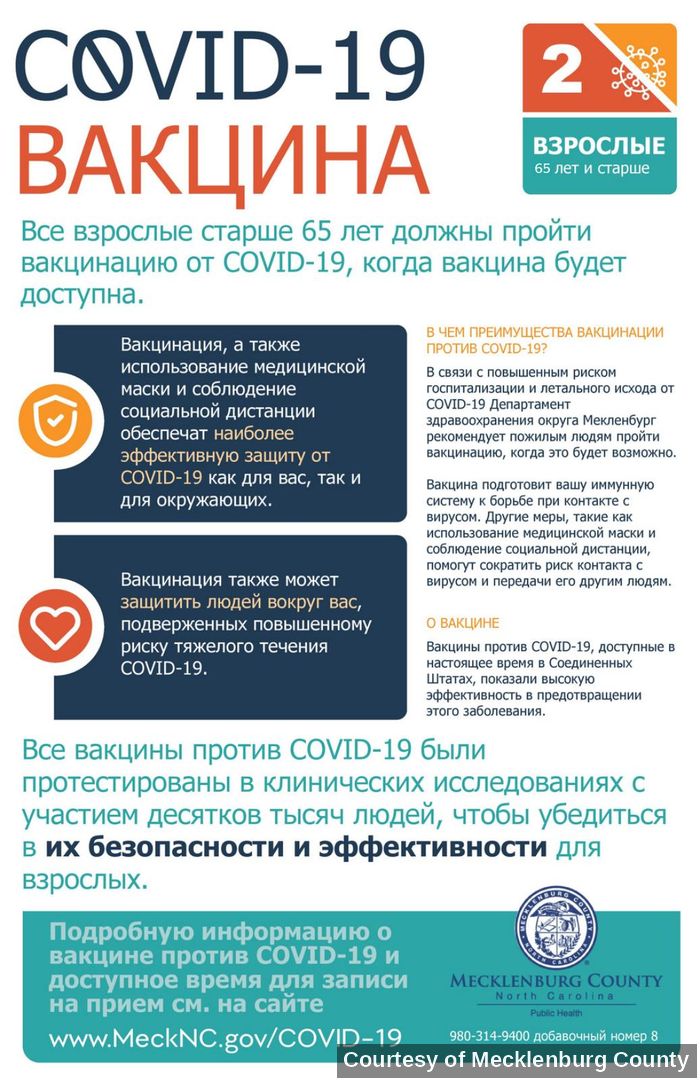
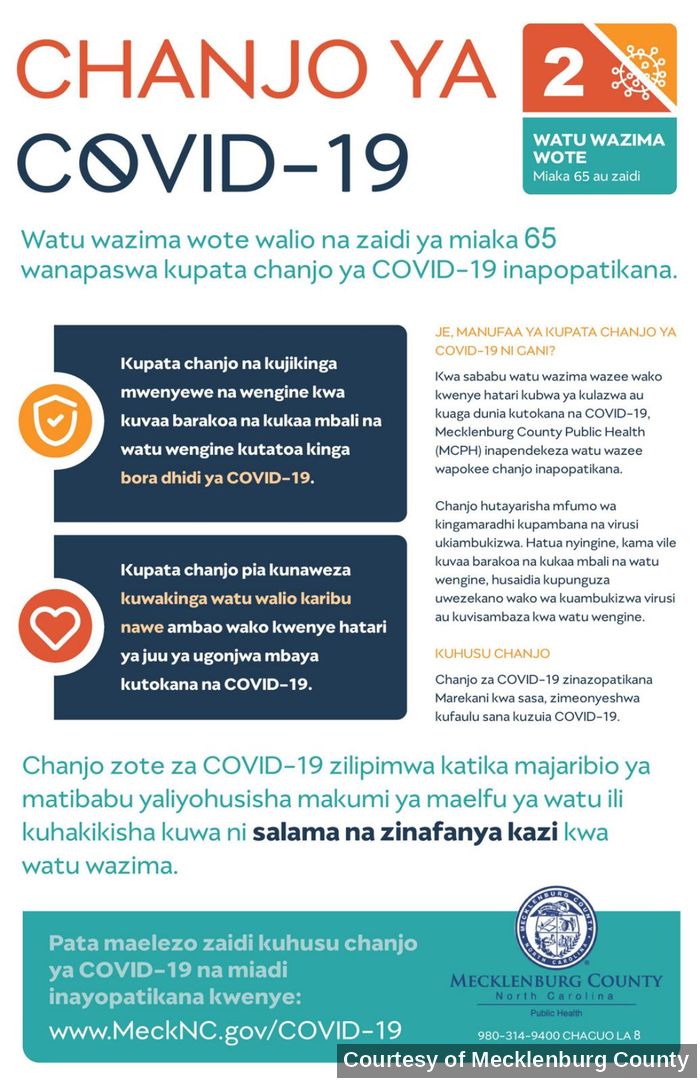
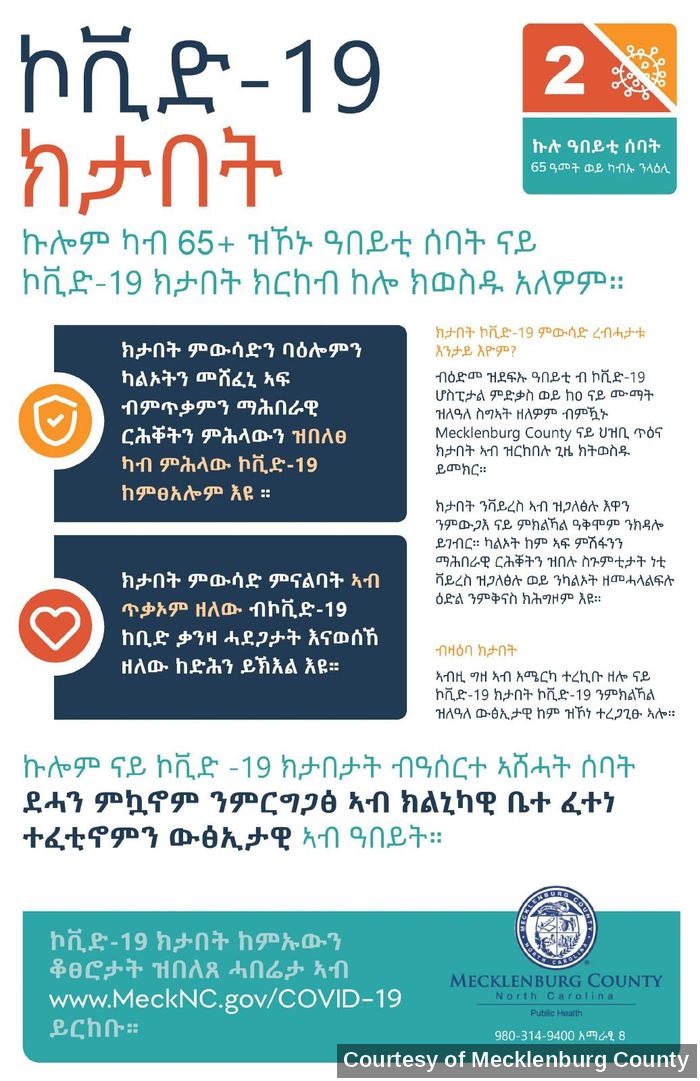
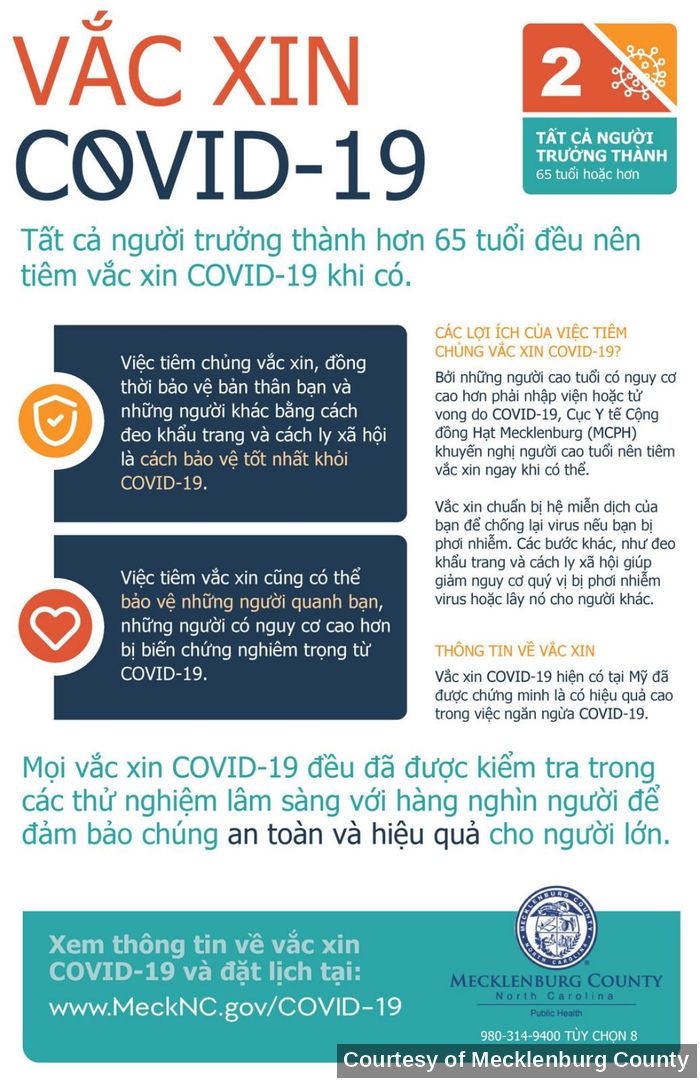
February 12, 2021. Hindi and Telugu versions.
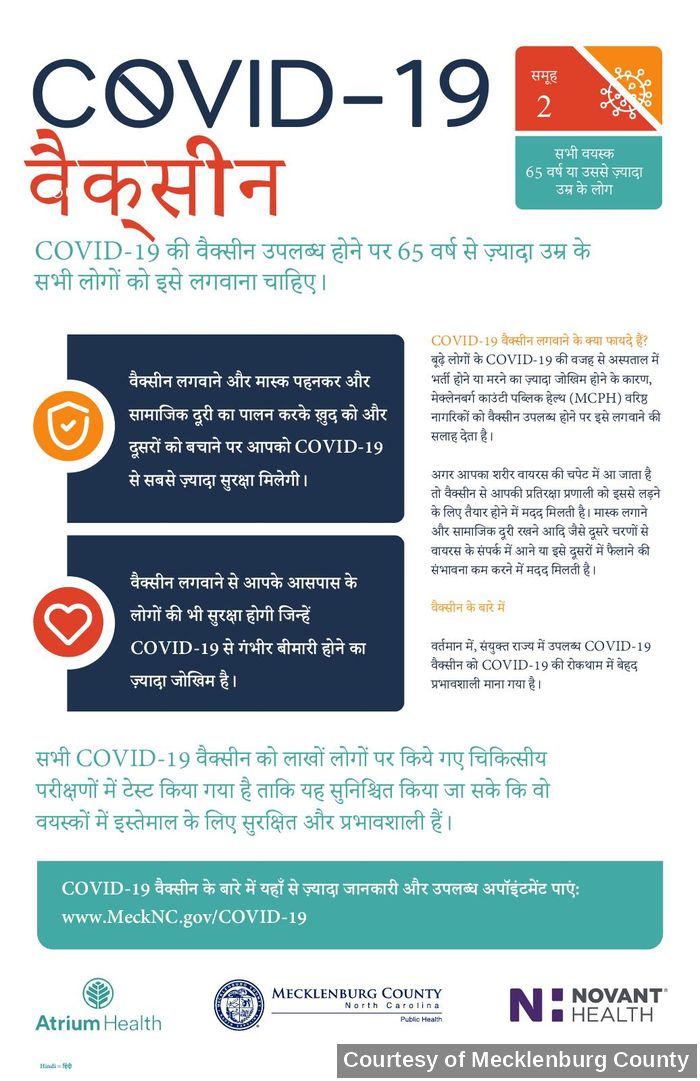
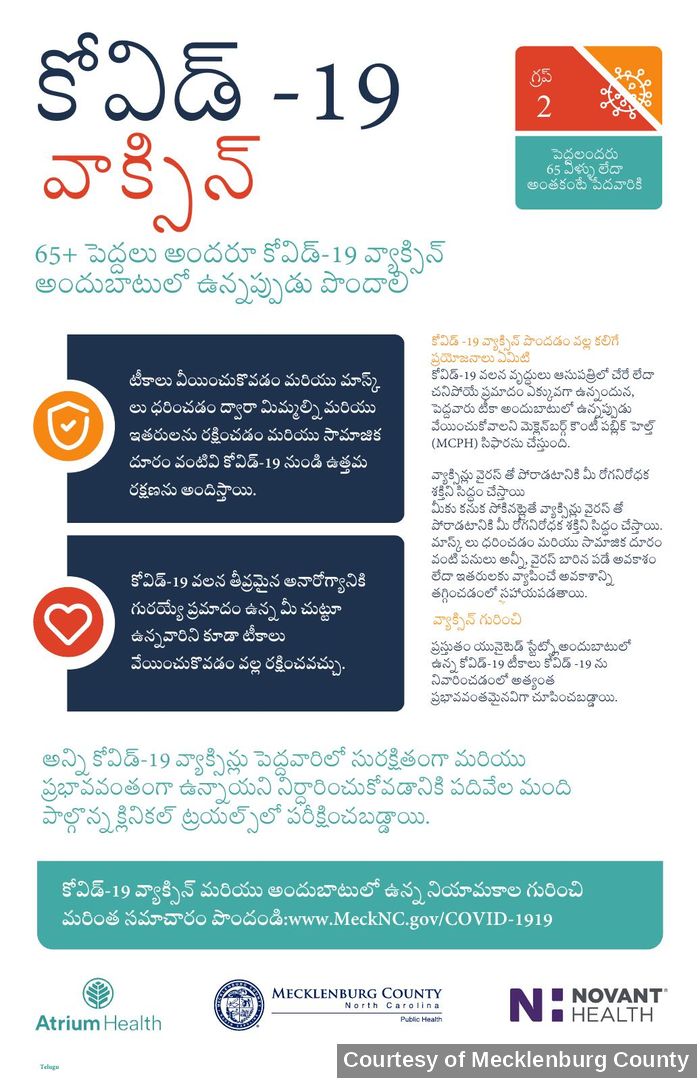
April 23, 2021. The "Get Your Shot" flyer in Chinese, French, Hindi, Korean, Russian, Spanish, Swahili and Vietnamese, plus a translated version of the logo.
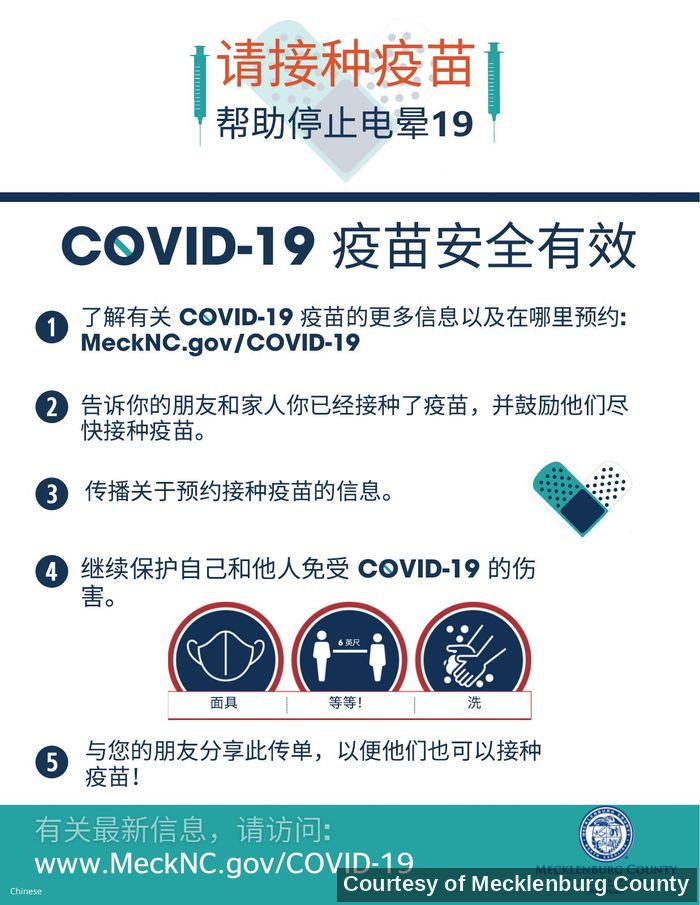
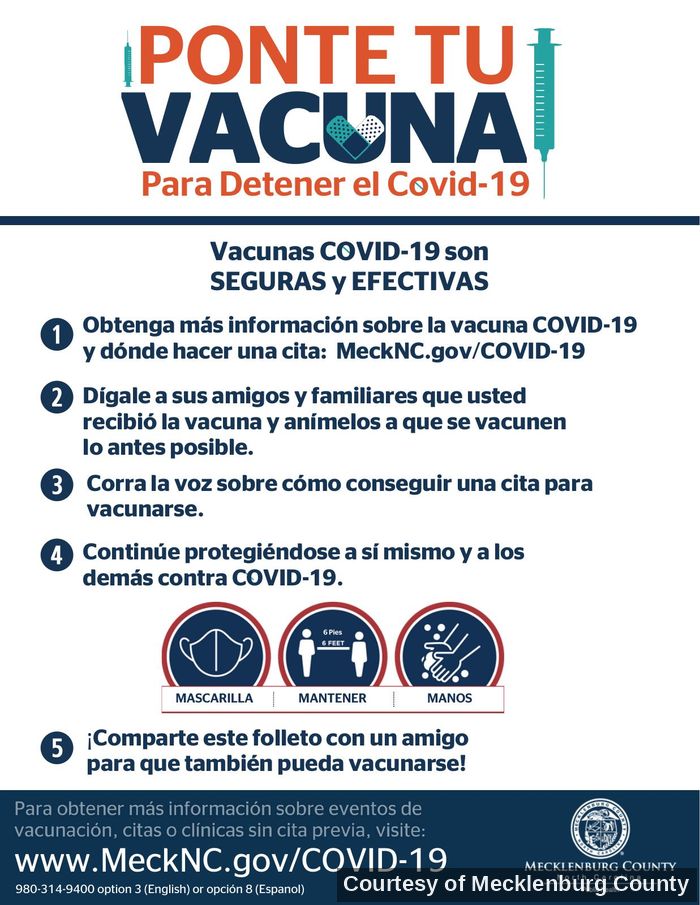
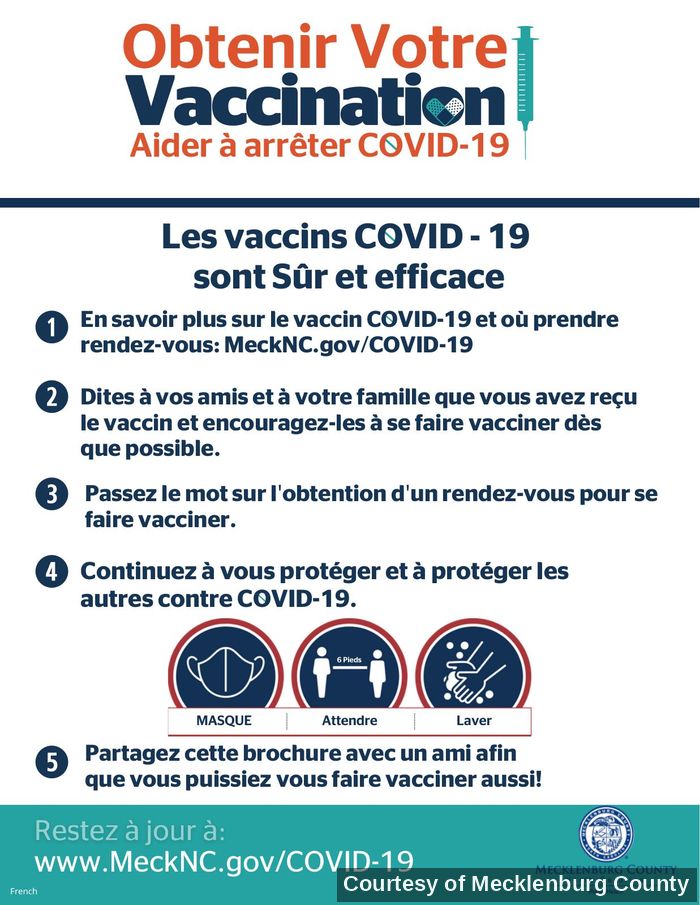
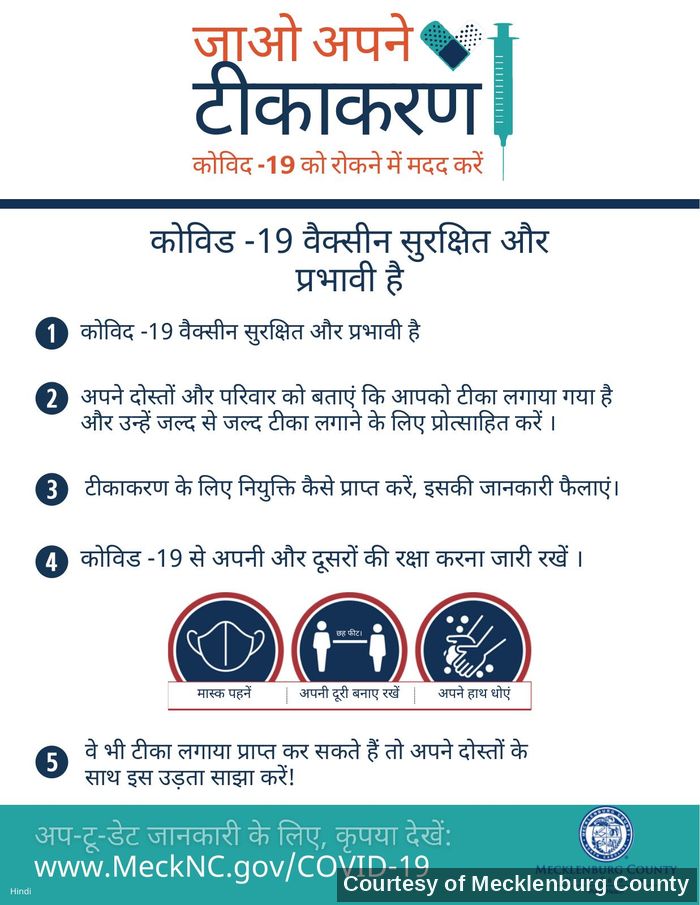
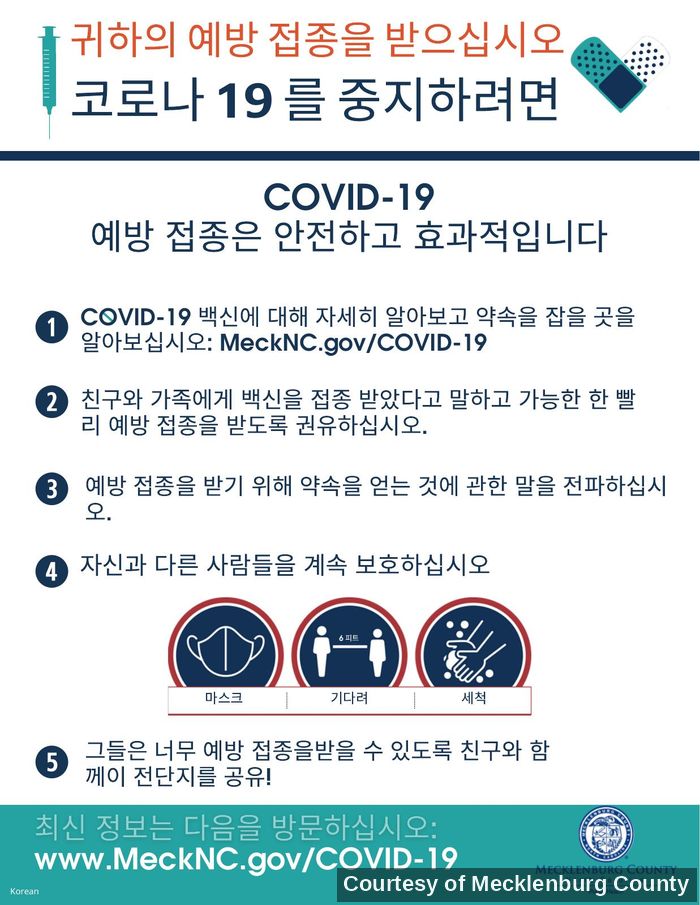
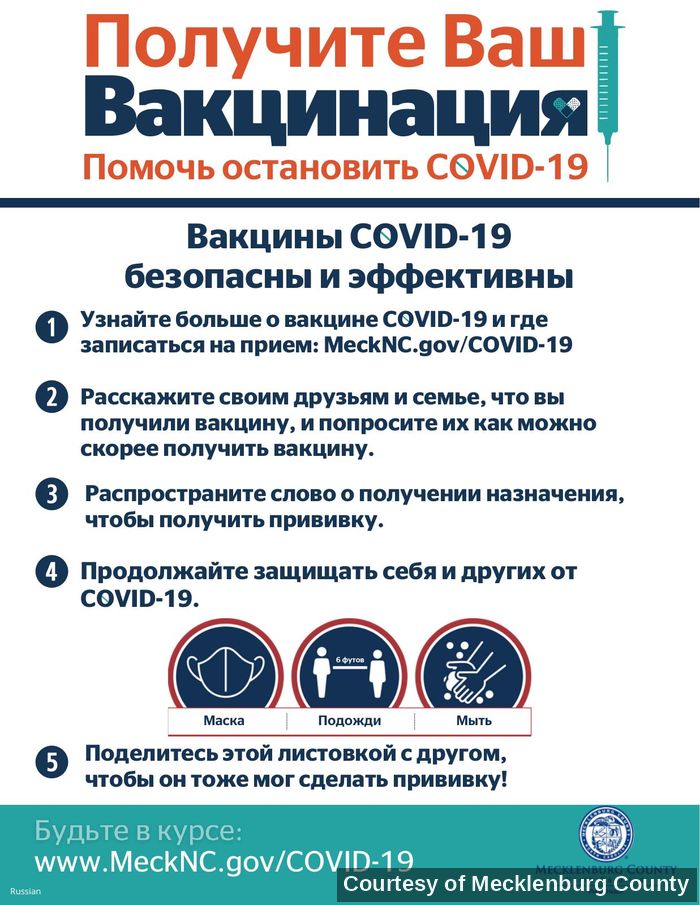
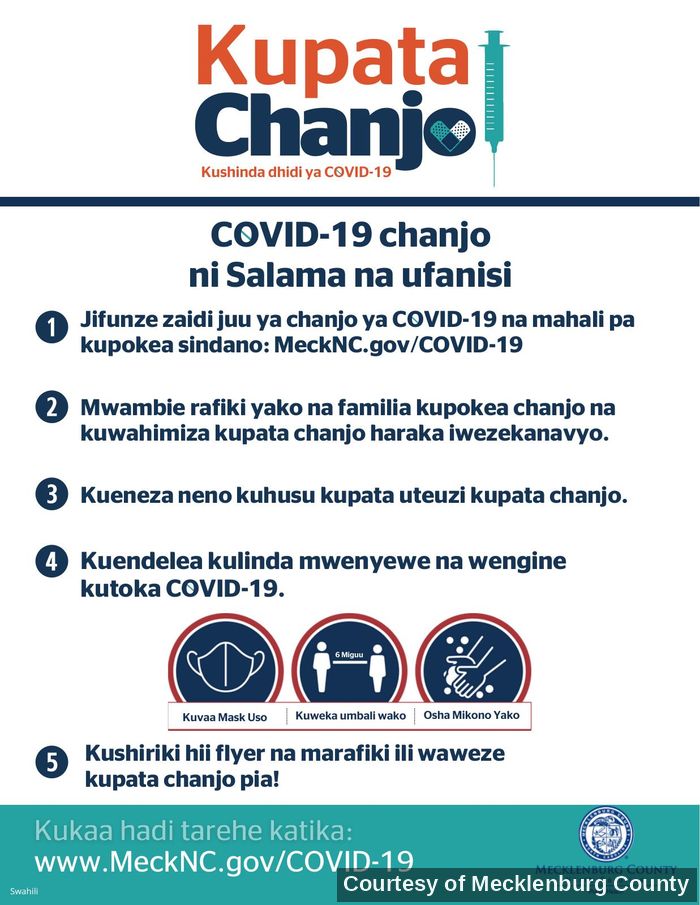
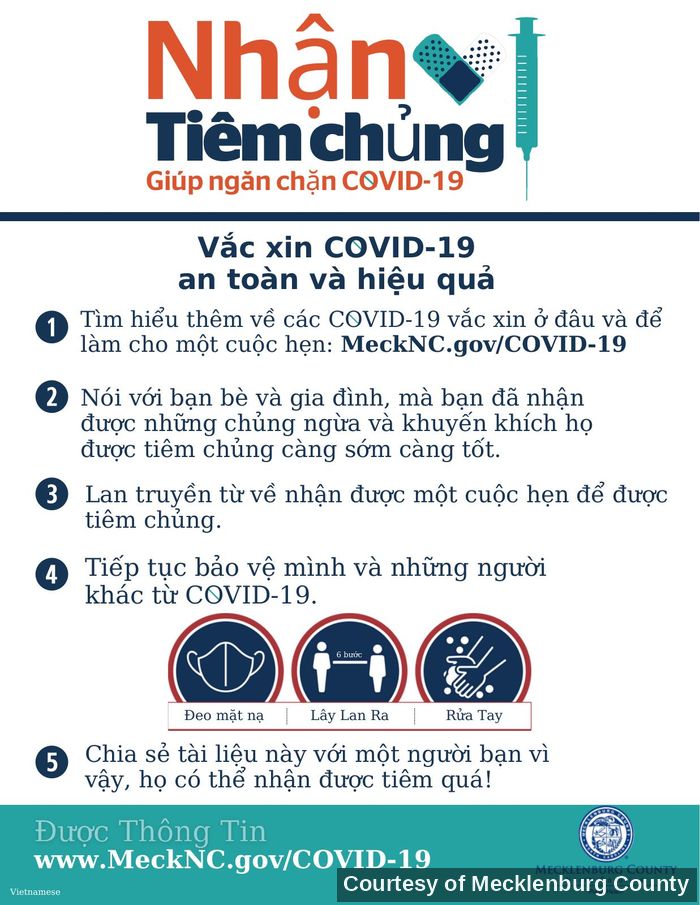
Summer and fall 2021 brought English and Spanish flyers for apartment-community clinics, event flyers, a "Doses to Doors" flyer, and isolation and quarantine guidance.
Together that is Amharic, Arabic, Burmese, Chinese, French, Hindi, Kinyarwanda, Korean, Nepali, Russian, Spanish, Swahili, Telugu, Tigrinya and Vietnamese: 15 languages besides English. Same poster, same layout, different words.
04The hard part: the words, and the speed
Translation was the most detailed piece, and dialect is where it matters most. French has to be the right French. Spanish has to carry the right colloquialisms and idioms for the people reading it. A literal translation can be correct and still sound wrong, or worse.
The effort ran on phone calls and email to churches, stores, community members, city and county staff, and health department and hospital staff, asking for help with translation and review. Each item, in each of the 15 languages, had a list of who reviewed it, and review rounds came back in under 48 hours. At first helpers were asked to translate from scratch. Later the ask changed: a rough machine translation went out with a simple request for a yes or no, and the email went back and forth until a native speaker said it made sense. Then came approvals and the normal channels. Flyers were handed out through local churches, organizations, community centers and community groups.
Commercial translation services take weeks, and a clinic can change locations on Thursday. Community and faith partners could turn things around faster, so the work went through them, in house. Speed was the point.
The health department did it on the go: 15 languages, constant changes, short deadlines.
Large government campaigns often mean billboards and a lot of money. This was the other kind: grassroots, one community at a time, in the language people speak at home.
05What it taught: the translation was the work
The job started as a design job. It ended as proof that the design was the carrier. The correct, simple, trusted message in the reader's own language was the product.
That is why AI translation gets some respect and some caution here. It can do in seconds what took a week. It cannot yet decide which communities to ask, who must approve, or when two reasonable translations of one sentence mean different things to different people. The fast part got faster. The aligning part is still a job.
06The mini-grants: finding helpers, and the art that came with them
In February 2021, the City of Charlotte's Office of Equity, Mobility and Immigrant Integration announced $500 mini-grants for artists to create art with multilingual messaging that builds trust in the COVID-19 vaccine. Mecklenburg County and the City co-sponsored it as an art contest. After a judging process, the selected artworks were shared with the county's language communities, free to download and print.
The mini-grants did two jobs. They were one way the effort found community people who could help with translations, since many of the artists and partners worked inside their own language communities. They also produced art that spoke to those communities in their own languages.
A seat on the selection committee that chose the winning artists meant reviewing dozens of pieces.
Emily Yaffe, then Immigrant Integration Specialist at the City of Charlotte's Office of Equity, Mobility and Immigrant Integration, was a real partner. She helped start aligning the effort, pointed to the right people, steered the wording toward what was right for each community, and helped get translations done fast and build large lists of community groups to reach.
07Who made it possible
Gibbie Harris, then Mecklenburg County Health Director, who backed this approach.
Dr. Raynard Washington, then Deputy Health Director, who gave the first assignment on the first day and backed the work.
Emily Yaffe, then Immigrant Integration Specialist, City of Charlotte Office of Equity, Mobility and Immigrant Integration, who helped align the effort and get translations done quickly.
The community members, faith leaders, county and city staff, artists and partner organizations who reviewed the translations.