 Brad E. Bailey
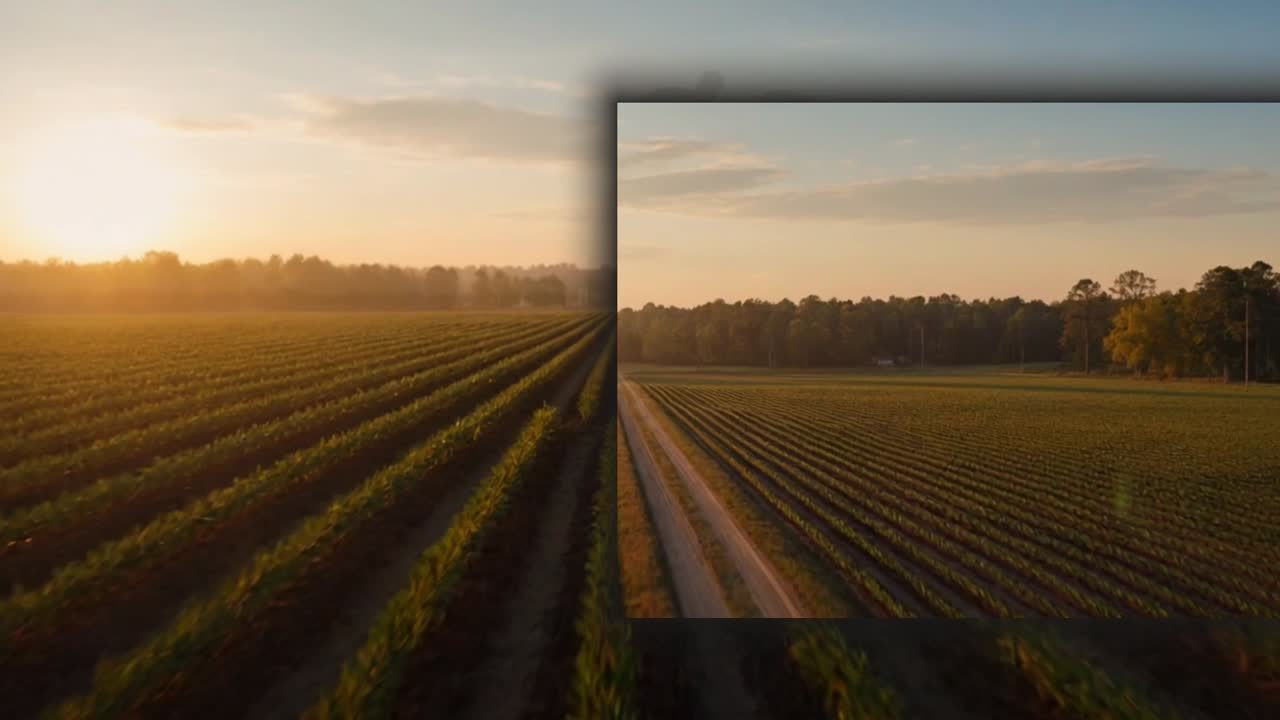
Two months. Four films. Four styles. One redesigned production process.
The bottom line up front: in two months, a small team inside a regulated bank made four films in four different styles: a historical film built from archival photographs and AI reconstructions, a hybrid documentary on a working farm, a commercial generated entirely with AI, and a traditional interview shoot. Total tool spend: a couple hundred dollars. This is how we did it, and what it means for anyone who makes communications for a living.
One question ran underneath all of it: when one person can do the work of many crafts, what happens to marketing and communications‽
01A better question for the annual meeting
At heart, I have always been a storyteller. I have spent my career in communications, radio, television, and emerging technology; the tools keep changing, and the fundamentals do not. Find the story, understand why it matters, and tell it in a way people remember.
In 2026, I was working on a Farm Credit bank's Annual Meeting. The theme was Disrupt to Win. That gave me an opening to ask a question I liked better than "What should we put on the screen?": What could we do differently to make the whole experience better?
AI was changing fast. We could generate historical scenes, animate photographs, create moving images, and clone a human voice for narration. Work that once demanded a much larger production effort was becoming possible with a smaller team and a different set of tools.
I wanted to see whether those capabilities could help us tell stories worth telling. Not an AI demonstration dressed up as a film; an actual production, with history to get right, people to work with, deadlines to meet, and an audience waiting at the other end. I also wanted to know whether we could change the process itself.
I took the idea to Marion Harris, the bank's president and CEO. Marion was receptive to using emerging technology to push the boundaries of what we could do. His answer was short: "Do it."
That was the permission to try. The Long Road Project took shape around four films in four different styles, each one testing something different: a historical film, a hybrid documentary, a fully generated commercial, and a traditional shoot. Same deadline, same small team, one new process underneath all of them.
02Film one: The Long Road, the historical
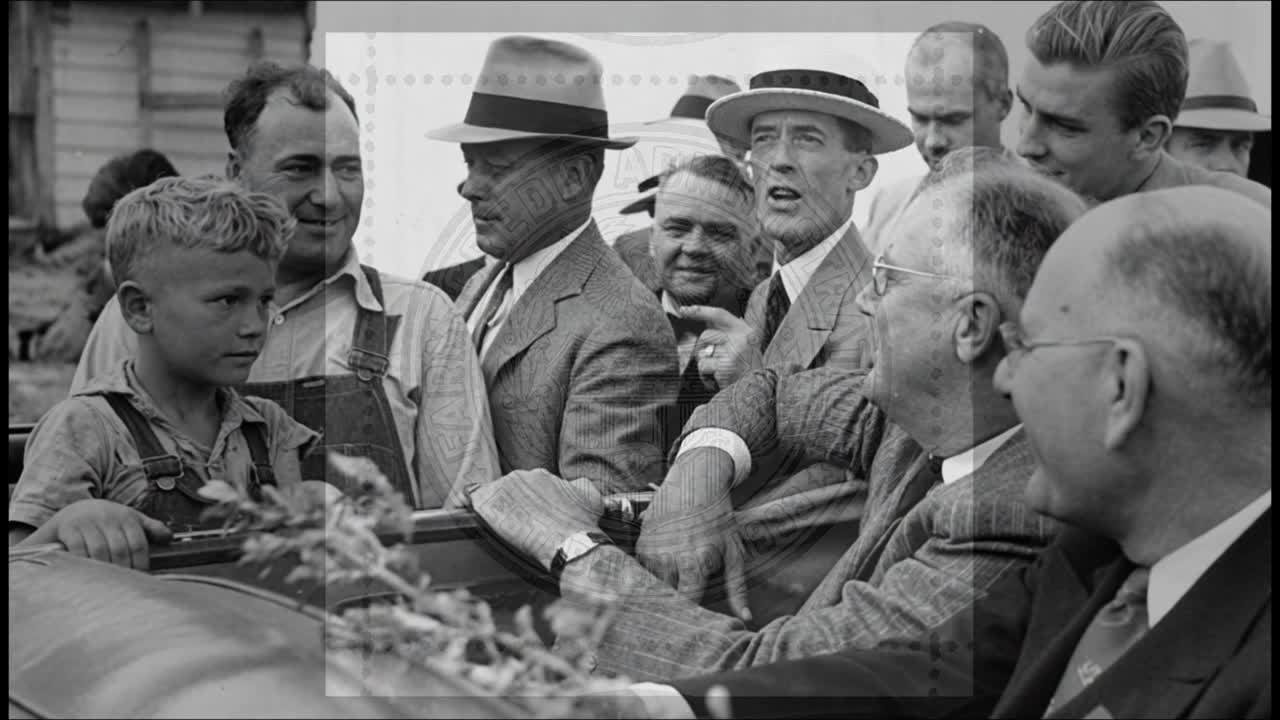
The first film traced the Farm Credit System to the Federal Farm Loan Act of 1916 and followed more than a century of change in American agriculture. Markets shifted, equipment changed, and farming families endured difficult years and adapted to new ones. A timeline could explain that history, but I wanted people to feel the distance we had traveled.
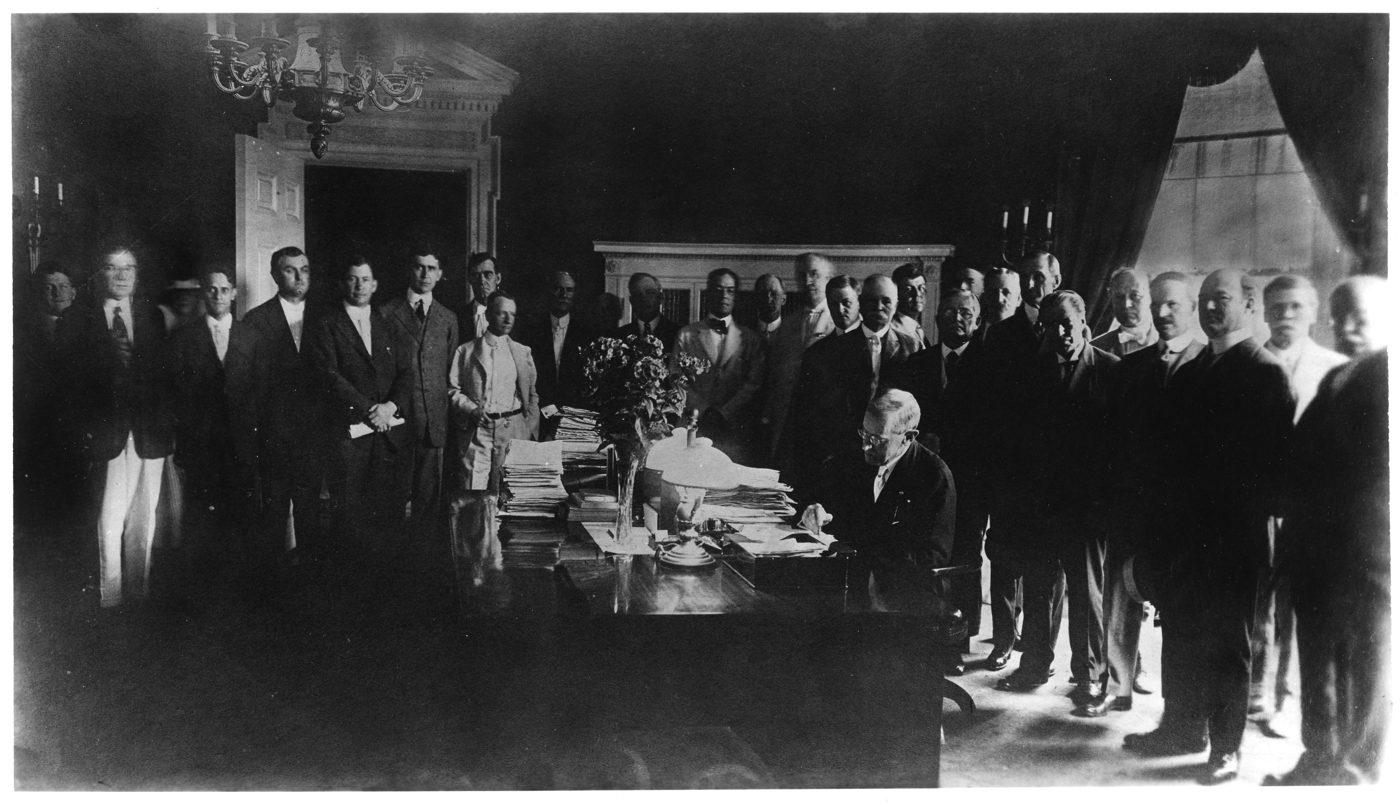
Could we reconstruct historical environments? Could we make archival photographs move? Could we carry an audience through the decades, from the experiences of yesterday's farmers toward a vision of what agriculture might look like around 2050?
We used historical research, scripts, generative imagery, AI video, voice narration, and conventional editing to build visual interpretations of different periods. The style was historical, built from two kinds of source: real archival photographs where they existed, and AI reconstructions where nothing else could take us there. These scenes were reconstructions, not newly discovered archival footage. Getting that distinction right mattered as much as making the scenes look convincing.
The finished film, The Long Road, ran just over five minutes. It gave us a way to tell a long institutional story without turning it into a lecture, and it tested whether AI-generated historical imagery could serve a real narrative.
03Film two: The Next Generation, the hybrid
The second film brought the experiment out of the history books and onto a working farm.
The project gave us the chance to work with Rachael Sharp and her father, Don Sharp, of Sharp & Sharp Certified Seed in Allendale, South Carolina. Earlier in 2026, Rachael and Don appeared in OpenAI's Generations of Farming campaign, including a Super Bowl placement. Rachael was using ChatGPT to make decades of family farming knowledge, including her father's records, easier to find and apply. The technology was interesting; the inheritance of that knowledge was the bigger story.
We wanted to follow that thread rather than remake the commercial. What does a family hand down besides land and equipment? What must the next generation preserve, and what should it change? Those questions gave us a film worth making.
We went to the Sharp farm in Allendale to film interviews and the place itself. We also worked with historical family photographs, some given restrained AI-assisted movement so the audience could move between generations. The finished style cut between traditional video and AI imagery. The technology supported the family's story rather than inventing a different one.
The result, The Next Generation, was a documentary of roughly eight minutes. Real footage and real conversations carried the film. AI-assisted imagery connected those moments with the family's past. The combination mattered: the human material supplied the truth; the new tools gave us another way to show it.
04Film three: Farmers Just Want to Farm, the concept
The third film, Farmers Just Want to Farm, went all the way: a commercial generated entirely with AI. No cameras, no location days, no crew standing in a field at dawn. Every frame was built from prompts, revisions, and judgment.
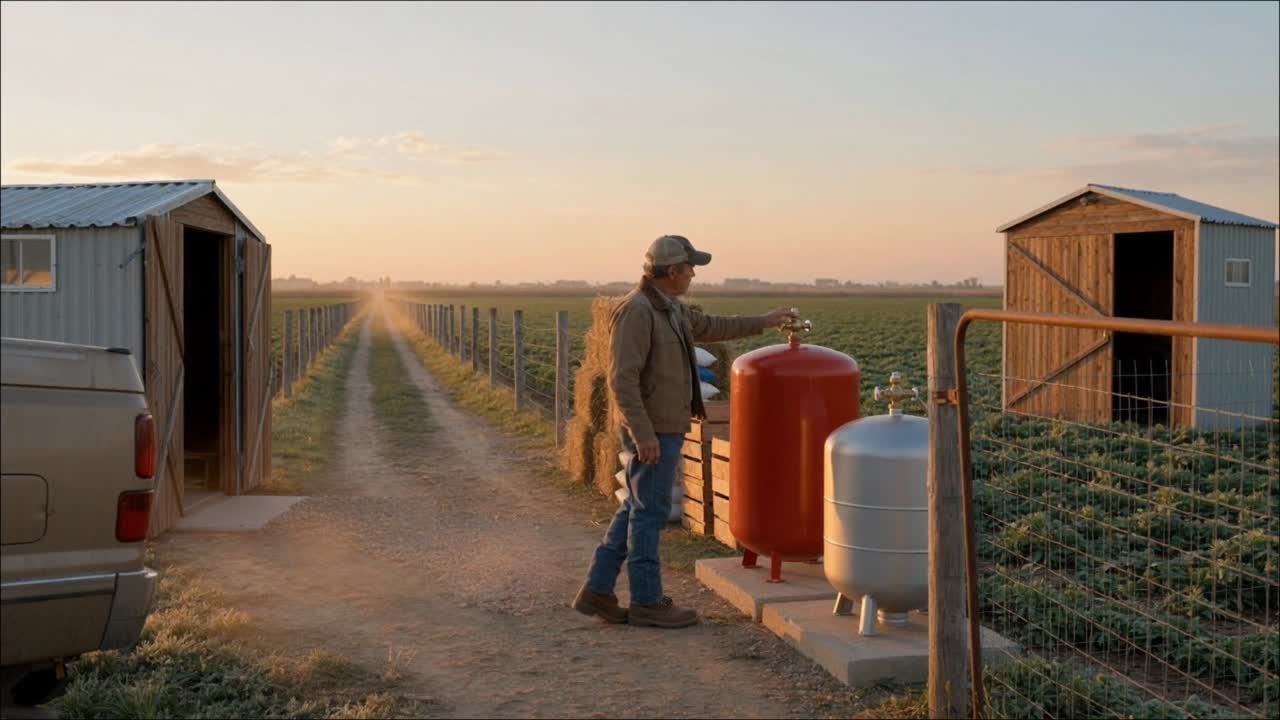
It was a concept piece, and it served a different purpose than the other three. The Long Road proved we could reconstruct the past. The Next Generation proved we could blend new tools with real people; this one asked a question about the future. Could we take a story that does not exist yet, about where agriculture and the services around it are heading, and simply generate it? Could a small team produce a spot that talks about services and products through story, without booking a single shoot day?
Inside the same two-month window and the same small tool budget as the rest of the project, the answer was yes. That matters well beyond one commercial. If you can tell the story of the future before you can film it, you can test messages, explore positioning, and show an audience a vision while it is still being decided. That is not just cheaper production; it is a new step in the process.
05Film four: the traditional shoot
The fourth film was the most conventional of the set: a traditional on-camera interview film with our CEO, shot the way such films have always been shot. It was produced for internal use and will not be shown publicly; nothing more needs saying about it here, except that it belonged in the experiment. A new process has to handle the old assignments too.
06Two months to build the films and a new process
We completed the production in roughly two months: research, original farm shoots, AI experimentation, narration, revisions, and final editing. That is the clearest measure of the project. The films were made and delivered on a real deadline.
We did not have time for a long sequence of handoffs in which every script revision restarted the audio, visuals, and edit. We had to work in shorter loops, in parallel where it made sense, and decide early what needed a camera and what could be created another way.
The workflow evolved as we used it. We researched and wrote, filmed the people and places that had to be real, developed AI reconstructions for moments we could not film, created and revised narration, and assembled the material in conventional editing software. When one piece changed, we changed that piece rather than restarting everything.
Tara Godbolt's voice became an important part of the films. With her participation, we created an AI voice clone for narration. When we changed a line, we could regenerate the affected audio, check the timing, and keep editing instead of booking another recording session. Tara supplied the human voice; the cloned model made revision faster. That was not a gimmick; it removed a recurring production bottleneck.
The same logic guided the visual work. AI gave us possibilities for historical scenes and movement in old photographs. Cameras captured the Sharp family as they were on their farm, and editors brought the parts together. Plenty of generated shots failed the test: they looked interesting but did not belong in the story. We cut them, revised them, or returned to the footage.
No single tool made the production faster; connecting the tools into a workable process did.
A few honest numbers, all approximate. Total tool spend: a couple hundred dollars, not counting anyone's time. My own time: about two solid weeks, near-exclusive. Everyone else contributed an hour or two each, plus a day of shooting and a small reshoot. The two-month window on the calendar held all of that inside it.
07The production loop
Our practical sequence was simple enough to repeat: establish the story and verify the facts; choose what must be filmed; generate and test the visual material we could not capture; build narration; edit, review, and revise the affected parts. We were not always moving in a straight line. The point was to shorten the distance between a question, a test, and a decision.
We used AI for research assistance, imagery, video generation, still-image motion, and cloned narration, alongside traditional cameras, on-location audio, and editing. I am deliberately not treating this as a ranking of applications. The inventory, as best I can reconstruct it. On the AI side: ElevenLabs, Kling (tried), Grok, SuperGrok and Grok Imagine, ChatGPT, Perplexity and Perplexity Computer, Copilot, Midjourney (tried), Adobe Firefly, Runway, and Claude, alongside Photoshop tools, Photoshop Elements, and PowerPoint's built-ins. Around those sat a crowd of small plug-ins, converters, review tools, and helpers that mattered day to day.
The gear was just as hybrid: a drone, a Canon Rebel, DJI mics, one laptop, and a Samsung S23 Ultra Android phone that shot roughly 90 percent of the project in HD. Editing lived mostly in PowerDirector, including PowerDirector 360, with some Photoshop Elements work alongside. It was a hybrid build on purpose: we tried tools, kept what earned its place, and dumped the rest along the way, partly to keep credit costs down.
08A note on context
This was produced inside a regulated financial institution, so we were thoughtful about which tools we used and how. If a small team can do that responsibly inside a bank, most organizations can too.
09What the experiment actually showed
We learned that AI could do more than generate an attention-grabbing image. In a real production, it could help us solve specific problems: depicting periods with limited footage, making still photographs part of a moving story, and revising narration without another recording cycle.
We delivered four films within the project window, three of them public, and changed our workflow along the way. I am not claiming a measured percentage of time or money saved. We did not run a controlled comparison with a traditional production. What I can say is that the revised process gave us options and speeds of iteration we did not have before. The proof was the finished work, not a spreadsheet of invented efficiencies.
There was also a limit worth stating plainly. AI could help us generate the material; it could not decide what deserved to be said. Someone still had to understand Farm Credit's history, ask the Sharp family the right questions, choose the shots, check what was true, and know when an image added something rather than distracted from it.
The work depended on people. Kristy Rupon and the Corporate Communications team helped align the history and coordinate the story. Jonathan Mashack, Ore Oluwole, and the Marketing team helped make the production real; Tara gave us the voice; Marion made room for the experiment; and Rachael and Don let us into their family's history. None of that can be replaced with a prompt.
The opportunity was to take friction out of the process without taking people out of the story.
10What this means for communications
This project changed how I think about the work ahead for communications and marketing.
Tools and technology are moving so fast that marketing will not look the same in a couple of years. The old production boundaries are already getting less useful. A writer can now explore imagery; an editor can test narration; a producer can prototype scenes before committing the time and money to build them. One person can now credibly do six jobs that used to take six specialists. We lived that for two months. And a capable team can cross disciplines faster, with fewer unnecessary handoffs.
I think the advantage will go to people who understand more than one craft and can connect them: writing, audio, video, design, storytelling, and the systems that hold a project together. Depth still matters; so does knowing when you need a specialist. But knowing only one part of a process is becoming a narrower place to stand.
Graphic designers, agencies, studios, and in-house teams have a choice. They can keep selling or managing production steps as though the tools have not changed, or they can help organizations rethink how the work gets done. The second path asks more of us. It is also where I see the opportunity.
11The people behind the work
This was my idea to pursue, but it was not a one-person production. The credit belongs to the people who made it possible.
Marion Harris, President and CEO: executive sponsorship and encouragement. His "Do it" made the project possible.
Kristy Rupon, Director of Corporate Communications: historical alignment, coordination, and the judgment to tell a century of history responsibly, along with her Corporate Communications team.
Jonathan Mashack and Ore Oluwole: multimedia production and project collaboration across every element it took to deliver the films, with the broader Marketing team.
Tara Godbolt: the human voice behind our AI-cloned narration, which let us revise audio quickly across the films.
Elise Otto, a marketing and communication strategist and my former associate: support across the project.
Ashley Hetherington, Chief of Staff: coordination and support throughout.
Colleagues in IT and Information Security, with thanks for their support.
Rachael E. Sharp, Don C. Sharp III, and Sharp & Sharp Certified Seed of Allendale, South Carolina: for entrusting us with their family's story, and for everything they did to make the film what it is. Original Sharp family commercial: OpenAI, Generations of Farming, 2026.
Project concept, creative direction, and AI production experimentation: Brad E. Bailey, in collaboration with the bank's team.
12What we learned
So what did we learn, and what do we still need to accomplish?
First, the disciplines are merging; that is no longer a prediction. On this project, writing, research, imagery, narration, and editing all sat within reach of the same small team. The people who thrive in the next few years will understand more than one craft and know how the crafts connect. The specialist is not dead; the handoff is.
Second, the tools are the easy part. They are cheap, they improve monthly, and a couple hundred dollars bought us more capability than a production budget used to. The hard part is the judgment wrapped around them: what story to tell, what is true, what belongs in the film and what gets cut. That judgment is still hired, trained, and earned the old way.
Third, the process has to be rebuilt, not just accelerated. Bolting AI onto the old sequence of handoffs buys a little speed; rethinking the sequence buys a lot. Short loops, parallel work, and early decisions about what needs a camera are what turned two months into four films.
Fourth, honesty about the tools is part of the craft. Our reconstructions were labeled as reconstructions. The archival material stayed archival. Audiences will forgive almost anything except being fooled, and they should.
What do we need to accomplish? More reps, for one thing. Two months taught us how much we do not know. We need more people fluent across disciplines, not just more licenses. We need more practice deciding what should be generated and what must be real, and clearer standards for disclosure so audiences always know what they are looking at. The organizations that figure that out will not just make content faster; they will say things worth saying while everyone else is still rendering.
I started this because I love history, I love telling stories, and I wanted to know what these new tools could make possible. I finished it with another question: if this much changed in two months, what might we be able to build next? The tools will keep improving, and some of the methods we used will look quaint before long. I am fine with that. The better the tools become, the more important it is to know what you are trying to say and why.
The tools changed. The process changed. The reason for telling the story never did.